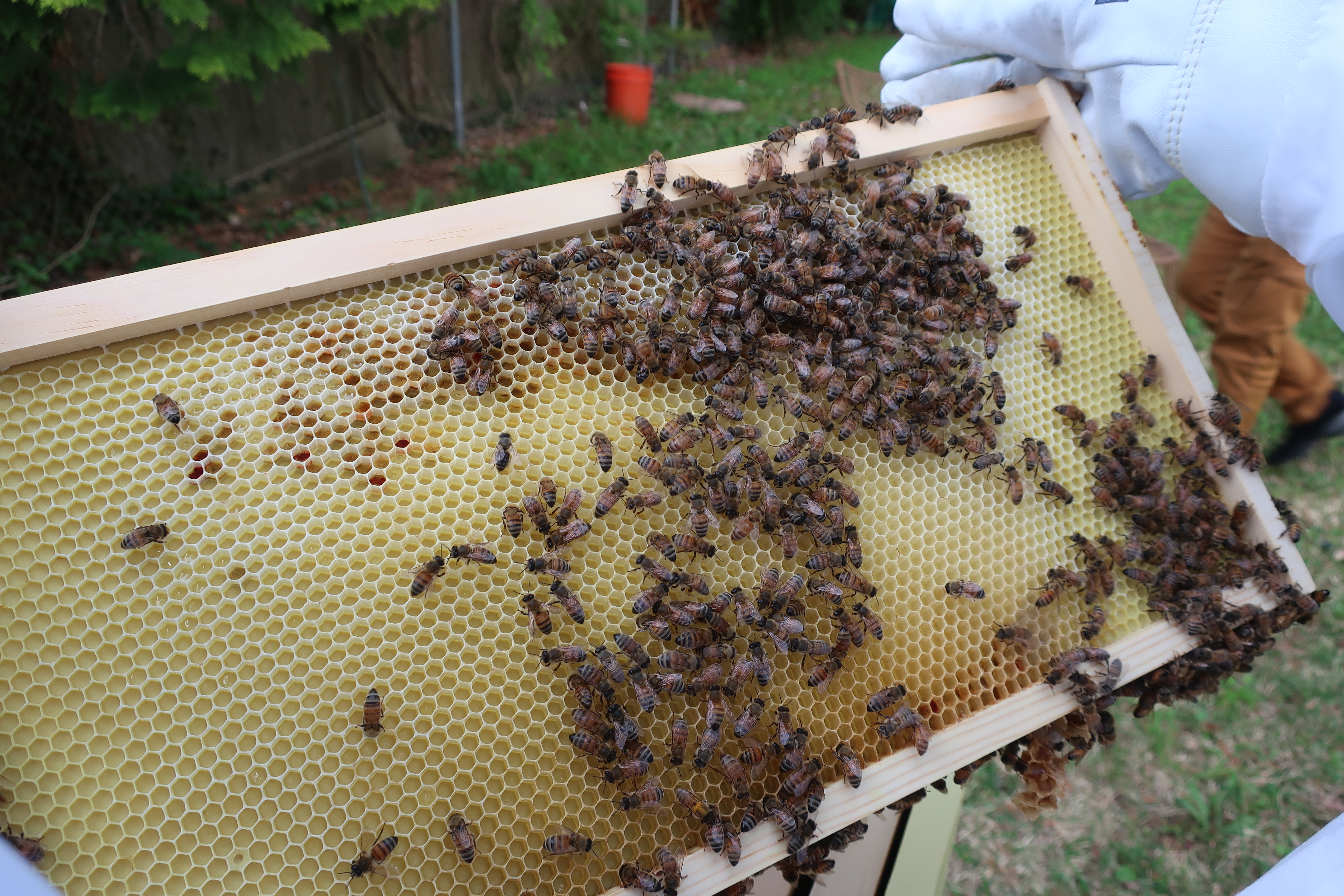
Save the Bees!
In response to the accidental introduction of the Varroa Mite (Varroa Destructor) to the Americas in mid 1990’s, the United States Department of Agriculture sought to develop a mite resistant strain of Honeybee. Initially, millions of hives were impacted and loses in apiaries rose to significant levels across the continent. While the first efforts were with chemical treatments, it was recognized very early on, that this was unsustainable and that the Varroa Mites could quickly develop immunities to any chemical treatment developed. It was also noted that promising chemical treatments, might not be necessarily the best use in hives that would contain honey.
By utilizing survivor stock from the very few hives that showed natural resistance to the Varroa mite, the scientists of the Bee lab were able to develop a natural strain of bees that would attack infected bee larvae in the comb and remove them from the hive. These bees are referred to as Varroa Sensitive Hygienic bees (VSH) and through further breeding they may help turn the tide of the Varroa scourge. These are not genetically modified bees or some Frankenstein Africanized bees but just selectively bred offspring of our common and gentle Italian and Carnolian European bees.
Starting in the Spring of 2021, we began introducing Varroa Sensitive Hygienic (VSH) bees to some of our colonies which have begun producing first generation queens and drones. While we have seen increased mite resistance from these bees, more importantly they have, through open mating with other colonies, past these hygienic traits at some level to surrounding colonies. As these genetic traits can be diluted over generations, our plan of the continued introduction of genetically diverse VSH stock that may, at least on a local level, improve both managed and feral stock’s resistance. While VSH bees are not a silver bullet for eliminating Varroa, as part of an integrated pest management system (IPM) along with organic based treatments, it may be a path a more sustainable population of bee colonies everywhere!
 Princeton Apiaries